Thursday, August 25, 2011

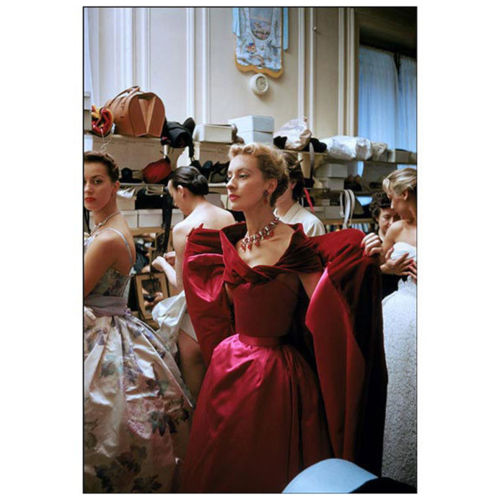
Mark Shaw-Backstage at Pierre Balmain - Paris, 1954


Models getting ready back stage, the gowns and clothes are so graceful and stunning YET!!! check out the granny pants ( undies) thy have on beneath it all ahahahah love it xoxoxoxo

Sunday, August 14, 2011

La lune a un mètre - Melies (1898)


( the moon at arms length)

Pretty pretty rad and lovely and delicious ALL OF IT! I love the moon I am surrounded by moon hearted loves and people I am very luck indeed! there for thank you moon and I share this with you all xoxox

La lune à un mètre(The Moon at One Meter)Also known as The Astronomer’s Dream; or, The Man in the Moon in the USA : [An Astronomer’s Dream](1898) FrenchB&W : Short filmDirected by Georges Méliès
Cast: [?] Georges Méliès?
Méliès Star-Film production. / Produced by Georges Méliès. /35mm spherical format / Frazer reel numbers 160-162
Survival Status: Print exists.


Sunday, July 31, 2011

Psychic TV Live In Berlin - Atonal Festival, December 2nd, 1983 (Full Sh...

throbbing gristle - discipline

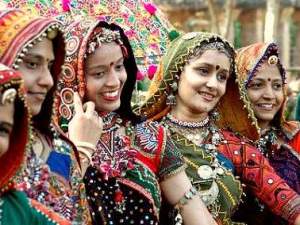
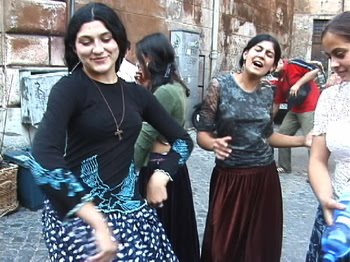
Romani men and women - wonderful xo


kalbelia tribal rajasthan dance (Banjara in relation to blog below) xoxoxo

The Banjara tribe the gypsies of India! xoxo BEAUTIFUL


The Banjara tribe is the most colorful of any tribal group in India, the original habitants of Rajastan.
The Banjara are a class of usually described as nomadic people from the Indian state of Rajasthan, North-West Gujarat, and Western Madhya Pradesh and Eastern Sindh province of pre-independence Pakistan. They claim to belong to the clan of Agnivanshi Rajputs, and are also known as Banjari, Pindari, Bangala, Banjori, Banjuri, Brinjari, Lamani, Lamadi, Lambani, Labhani, Lambara, Lavani, Lemadi, Lumadale, Labhani Muka, Goola, Gurmarti, Gormati, Kora, Sugali, Sukali, Tanda, Vanjari, Vanzara, and Wanji. Together with the Domba, they are sometimes called the "gypsies of India"

Their customs, language and dress indicate they originated from Rajasthan. They live in settlements called thandas. They lived in zupada (hut). Now many of them live in cities. They have a unique culture and dance form. On many occasions they gather, sing and dance.

Their traditional occupation is agriculture and trade. Banjaras are also a group of nomadic cattle herders.

The accurate history of Lambanis or Lambadis or Banjaras is not known but the general opinion among them is that they fought for Prithvi Raj Chauhan against Muhammad of Ghor. The trail of the Lambadi/Banjara can be verified from their language, Lambadi borrows words from Rajasthani, Gujarati, Marathi and the local language of the area they belong to.

Banjaras originally belong to Rajasthan and they were Rajputs[citation needed] who migrated to southern parts of India for trade and agriculture. They settled down in the southern or central area of the country and slowly loosened contacts with Rajasthan, and their original community. Over a period of time both the communities separated and they adopted the local culture. The language spoken by Banjaras settled in Yavatmal district of Vidarbha, Maharashtra is an admixture of Hindi, Rajasthani and Marathi.

Lambadi Dance is a special kind of dance of Andhra Pradesh. In this form of dance, mainly the female dancers dance in tune with the male drummers to offer homage to their Lord for a good harvest. At Anupu village near Nagarjunakonda, Lambadi dance originated. They are actually semi-nomadic tribes who are gradually moving towards civilization. This dance is mainly restricted among the females and rarely the males participate in Lambadi dance. Lambadi is a special kind of Folk Dance which involves participation by tribal women who bedeck themselves in colorful costumes and jewelry.


JKB Fletcher hyporealist painter, street artist and fine artist. JKB based in Melbourne VIC


Simply Breathtaking
These are paintings from a show at 'Carbon Black Gallery' Prahan, Melbourne in 2009.

"Physically my painting is about creating form, depth and structure with less than one millimetre thick oil over the surface of a canvas or linen, developing a recognisable image with the use of colour. Once I've found the right model, chosen the right photo (out of the hundreds I've taken), the painting itself takes (on average) one hundred hours to complete.

My Paintings address questions of whether photorealism is anything more than a photograph with oil based paint. Using ‘reality’ and sensuality to provoke thoughts and sensations of physicality and beauty." - J.K.B fletcher

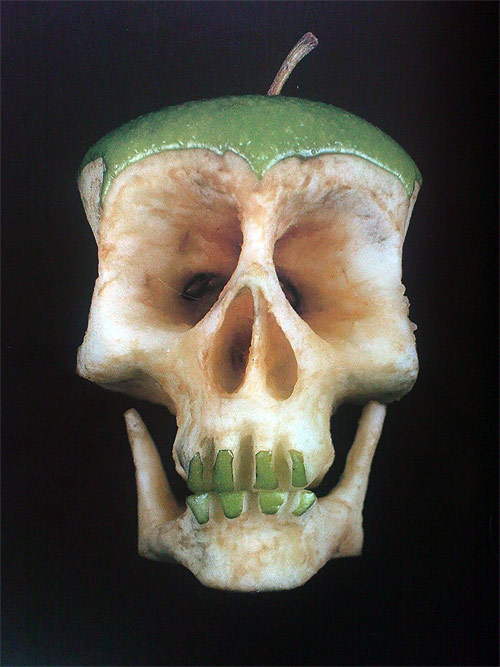
Friut and veg carving/scuptures YAY rad rad rad happy time.


The purpose of fruit and vegetable carving is to make food more attractive, more appetizing, and also easier to eat.OHHHHH to be an accomplished homemaker, hahah I salute you all. to be able to make your eyes drool as well as your mouth..... bravo darlings xoxo

before i die candy chang - Installation artist


Candy Chang likes to make cities more comfortable for people. She is a public installation artist, designer, urban planner.

Candy Chang, who describes herself as a public installation artist, designer and urban planner, rounds off her bio with this pithy mission statement, she likes to make cities more comfortable for people. In Before I Die, Chang has taken an abandoned building in New Orleans, boarded up and overrun with graffiti and converted it into a place for people to chalk their dreams.

“Before I Die transforms neglected spaces into constructive ones where we can learn the hopes and aspirations of the people around us. This process has been a great lesson… I believe the design of our public spaces can better reflect what’s important to us as residents and as human beings. The responses and stories from passersby while we were installing it have already hit me hard in the heart.” - candy chang

Dalton Ghetti’s Pencil Sculptures - yes again amazing


Pencils have been associated with art for hundreds of years, but it is only recently that they have been used for sculptures rather than to draw with. Artist Dalton Ghetti, a Brazilian native now living in Bridgeport, CT, has been carving miniature sculptures into the graphite of pencils since he was a school boy in Brazil. However, he makes a living as a carpenter. He received his associate’s degree in architecture from Norwalk Community Technical College. As a child in Brazil, Ghetti sharpened his pencils with a razor blade, which led to him experiment with carving into the wood of the pencils and then with other materials such as chalk, soap, and tree bark. Eventually, he discovered the ease with which graphite could be carved into because of its smooth texture. He uses No. 2 pencils and stronger, flat carpenter pencils.

Perhaps the most surprising thing about Ghetti’s sculptures is that he does not use a magnifying glass of any sort while creating his pieces. He does them all by hand and most of the time all he needs is a razor blade, a sewing needle, and very bright light. In order to protect his eyes and keep them from getting tired, he only works on his pencils for about an hour and a half a day. The time restraint and the tiny, intricate details make for a long process; his pieces can take months to years to complete. Ghetti explains: “I have an interest in small things in life—insects, moths, spiders. I spend a lot of time observing them. There’s a whole microscopic world out there that people don’t even notice.” Magnifying glasses have been previously provided for visitors to exhibits of his sculptures, as well as enlarged photographs, to fully appreciate the detail.

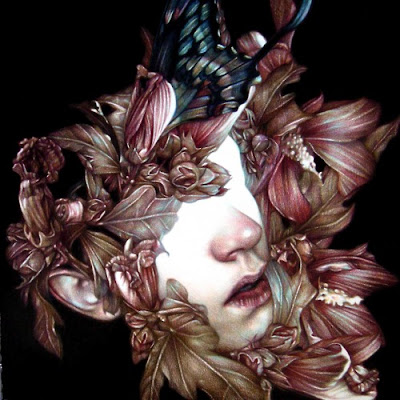
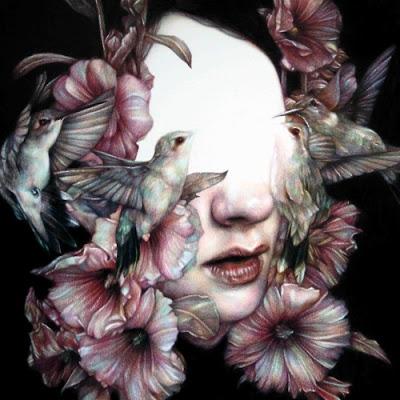
Marco Mazzoni. - Another breath taking artist xo


“InnerSpeaker” 2011, colored pencils on paper, cm 33x33


“Protect Me” 2011, colored pencils on paper, cm 30x40


“The Weeping”2011, colored pencils on paper, cm 36x30


“Less Than Zero”2011, colored pencils on paper, cm 30x30

Selene ( all so in relation the the blog post below!) xoxoox


SELENE was the Titan goddess of the moon. She was depicted as a woman either riding side saddle on a horse or in a chariot drawn by a pair of winged steeds. Her lunar sphere or crescent was represented as either a crown set upon her head or as the fold of a raised, shining cloak. Sometimes she was said to drive a team of oxen and her lunar crescent was likened to the horns of a bull. Selene's great love was the shepherd prince Endymion. The beautiful boy was granted eternal youth and immortality by Zeus and placed in a state of eternal slumber in a cave near the peak of Lydian Mount Latmos. There his heavenly bride descended to consort with him in the night.

A number of other goddesses were also associated with the moon, however, only Selene was represented by the old Greek poets represented as the moon incarnate. Other Greek moon goddesses included Pasiphae, the Leukippides, Eileithyia, Hekate, Artemis, Bendis, and Hera (who sometimes doubled for Selene in the Endymion myth).